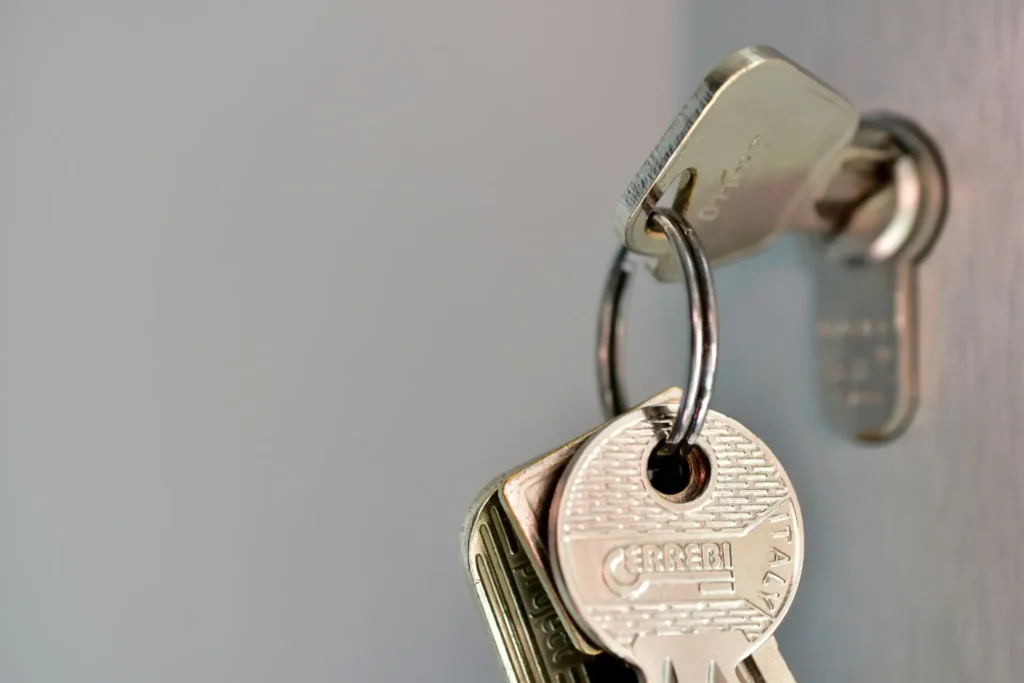
A key sticking in the lock usually points to key wear, debris inside the cylinder, poor lubrication, internal wear or door misalignment. Stop using extra force. A key that catches, bends or turns only at a certain angle can snap or damage the lock.
You can safely inspect the key, try a good spare and test the lock with the door open. Contact a locksmith if the key remains trapped, the lock grinds, the cylinder moves, or a uPVC multipoint locking system feels unusually stiff.
This guide explains the likely causes, safe checks and when to contact a qualified locksmith.
What Causes a Key to Stick in a Lock?
Is Dirt or Dryness Affecting the Cylinder?
Dust, metal particles and outdoor debris can collect inside the keyway, preventing the internal components from moving freely. External door locks are particularly exposed to dirt and moisture.
A dry cylinder may also create friction. Apply a small amount of manufacturer-approved dry-lock lubricant, such as a suitable PTFE-based product. Avoid cooking oil, grease and thick general-purpose sprays, as they can leave residue and attract dirt.
Is the Key Worn, Bent or Poorly Copied?
Regular use can wear down the cuts, bend the blade or create small burrs. A damaged key may only turn when held at a particular angle.
Try a less-used spare key. If it works smoothly, replace the worn key and have any new copies cut from the better version.
Does the Lock Work When the Door Is Open?
Test the key while the door is open. If it turns smoothly but becomes stiff when the door closes, the problem may be door misalignment rather than the cylinder.
Loose hinges, frame movement and changing temperatures can affect uPVC, composite and timber doors. The latch, bolt or multipoint locking points may press against the keeps. Avoid forcing the handle or key, as this can damage the gearbox and locking mechanism.
Can Moisture or Cold Weather Cause Stiffness?
Moisture may enter an exposed lock and contribute to corrosion. Cold conditions can also make the cylinder harder to operate.
Never pour boiling water into the lock. Use a lock-safe product or contact a locksmith if the problem continues.
Has the Internal Mechanism Worn?
Pins, springs, euro cylinders and uPVC gearboxes can wear or fail. Clicking, grinding or sudden stiffness may indicate an internal fault. A locksmith should identify the affected component before recommending repair or replacement.
What Should You Do When the Key Starts Sticking?
Stop Applying Force:
Remove the key gently. Do not use pliers or tools for extra leverage, as this can snap the key or damage the cylinder.
Check the Key and Try a Spare:
Wipe the key with a clean, dry cloth and check for bends, cracks or damaged edges. Try a good spare if available. Do not file the key because altering its profile may stop it from working.
If one key works and another does not, replace the worn key. If both stick, the fault may involve the cylinder, door alignment or wider locking mechanism.
Test the Lock With the Door Open:
Operate the handle and key gently while the door is open. Smooth movement when open usually suggests alignment pressure against the frame. Resistance in both positions points more towards the lock itself.
Use the Correct Lock Lubricant:
Apply a small amount of suitable dry-lock lubricant according to its instructions. Insert and remove the key several times, then turn it gently.
Do not overapply it. If lubrication makes little difference, stop and arrange an inspection.
When Should You Call a Locksmith?
Contact a locksmith when basic checks do not solve the problem or continued use could leave the door inaccessible or insecure. Seek professional help when:
- The key will not turn or come out.
- The key looks bent, cracked or close to snapping.
- The lock clicks, grinds or feels inconsistent.
- The door only locks when pushed, pulled or lifted.
- A uPVC or composite door handle feels unusually stiff.
- The euro cylinder moves within the door.
- The multipoint locking system does not engage fully.
- The problem returns after suitable lubrication.
A locksmith can assess the key, cylinder, handles, hinges, keeps and full mechanism. This helps distinguish between an adjustment, lock repair and necessary lock replacement.
Theveteranlocksmith advises addressing recurring stiffness early. For homeowners, tenants, landlords and businesses in Manchester and Greater Manchester, an inspection can confirm whether the entrance closes and locks correctly.
Can a Stiff Lock Affect Security?
Yes. A stiff or damaged lock may stop the bolt, latch or multipoint hooks from engaging fully. The door may appear locked even though part of the mechanism has not entered the keep correctly.
Check that the handle returns normally, the door closes without excessive pressure, and the key completes its usual movement. Do not assume a partial turn has secured the door.
If a euro cylinder needs replacing, ask whether a compatible anti-snap cylinder upgrade suits the door and existing hardware. However, a sticking key does not automatically mean the cylinder needs replacement.
How Can You Prevent It Happening Again?
- Keep keys clean
- Replace badly worn copies
- Use a suitable lock lubricant occasionally
- Avoid heavy key rings
- Tighten loose hinges and handles
- Protect external locks from excess moisture
- Arrange an inspection if stiffness returns
Theveteranlocksmith also advises checking the whole door, not only the cylinder. Poor alignment can place repeated strain on an otherwise serviceable lock.
What Is the Safest Next Step?
A key sticking in the lock commonly results from wear, debris, dryness, moisture, internal damage or door misalignment. Stop applying force, inspect the key, try a spare and test the lock with the door open.
Use only an appropriate lock lubricant and stop if the key bends, jams or needs significant pressure. A qualified locksmith can identify whether the issue involves the key, cylinder, mortice lock or multipoint locking system. Acting early can reduce inconvenience and help keep the entrance secure.